
What Does The Bible Say About Being A Pastor?
A Deep Dive into Scripture's Vision for Spiritual Leadership
If you've ever wondered what the Bible actually says about being a pastor, you're asking one of the most essential questions in Christian faith. Because the answer might surprise you, it's grittier, weightier, and far more demanding than most people realize.
Three Words, One Role
Here's something that surprises many people: the New Testament uses three different Greek words for the same ministry role. And our modern instinct to treat them as varying levels of management is entirely wrong.
The first word is poimen. We translate it as "pastor," but in the first century, that wasn't a religious title. It was an agrarian job description. It literally means shepherd. When Paul or Peter used that word, people wouldn't have pictured someone in a suit behind a pulpit. They would have pictured someone covered in mud, smelling like sheep, doing gritty, hands-on work in the fields.
The second word is presbuteros, which gives us "elder," but strip away the modern assumptions. The elders weren’t necessarily the oldest people in the room. They were the ones with what you might call the metaphorical gray beard of wisdom. It speaks to character and spiritual maturity.
The third word is episkopos, translated as "overseer" or, in some contexts, "bishop." In secular Greek culture, an episkopos was a manager, a foreman, the person on a job site making sure the work got done right and on time.
So, are these three different positions in the church? No. In Acts 20, Paul is speaking to the leaders of the church in Ephesus, and in a single speech, he uses all three concepts with the same group. He calls the elders together, tells them to shepherd the flock, and says the Holy Spirit made them overseers.
It's not a corporate ladder you climb. It's more like a prism: three different angles of the same calling.
The Noble Task
The Apostle Paul calls this role "a noble task" in 1 Timothy 3:1. The Greek word there, kalos, means "noble" but also implies something beautiful and deeply honorable. This isn't just a minister's job with a list of duties. It's a beautiful burden that carries eternal weight.
And burden is precisely the right word. Because when we hear "shepherd" today, we probably picture a petting zoo or a nativity scene. Someone in a clean bathrobe holding a perfectly white lamb, looking peaceful and serene… But that's the sanitized version.
In the ancient Near East, shepherding was dangerous, physical, and life-threatening work. You weren't just pointing sheep toward a patch of green grass. You were their entire survival system. You had to find the water, lead them there safely, and physically fight off predators. Wolves. Lions. Bears. And you had to go into the ravines and thornbushes to find the one that wandered off, even if it cost you everything.
This is why Jesus called Himself the Good Shepherd in John 10. He wasn't using a soft metaphor. He was describing a role that required Him to lay down His life for the sheep.
Feeding and Watching
The Apostle Peter, in 1 Peter 5, gives us the most comprehensive job description for pastoral ministry in Scripture. He tells the elders to "shepherd the flock of God," and he breaks that down into two core functions: feeding and watching.

Feeding means providing spiritual nourishment. You can't let the flock starve. A pastor must consistently give people the food of God's Word, teaching sound doctrine, explaining the profound truths of Scripture, and helping believers grow into maturity.
But then there's watching over. The Greek word used in Hebrews 13:17 for "keeping watch" is agrupneo. It literally implies being sleepless, constantly alert. It's the image of a night watchman who cannot afford to doze off because the enemy is at the gates. A pastor must be vigilant against spiritual threats, false teachings, and anything that would harm the community.
And here's the sobering part: that same verse says pastors "must give an account." They are ultimately answerable to God for how they stewarded the souls under their care. This is not a casual responsibility. It's an eternal one.
Character Over Credentials
If you look at the qualifications Paul lists in 1 Timothy 3 and Titus 1, you'll notice something striking. If you were an HR director hiring for a CEO position, this is not the list you would use.
For a CEO, you'd want strategic vision, dynamic public speaking, and a track record of financial growth. But Paul's list is almost entirely character-based: above reproach, temperate, sensible, respectable, hospitable, not violent, not quarrelsome, not a lover of money, faithful in marriage, managing their household well.
Why the emphasis on character? Because the church isn't a corporation. It's a family. And the pastor's life is meant to model the Gospel. If their life contradicts the message they preach, the message becomes hollow. Character isn't optional for ministry jobs. It's the foundation.
This is why Paul adds "not a recent convert." You don't put a novice pilot in the cockpit of a transatlantic flight. And you don't put a new believer in charge of shepherding souls. The weight is too heavy. The stakes are too high.
Servant Leadership
Jesus revolutionized the entire concept of leadership in Matthew 20:25-28. The world's model is top-down: "I'm the boss, you do what I say."
"Not so with you," Jesus said.
The Jesus model is the towel and the basin. It's washing the dirty feet of your followers. It's becoming the servant of all. "The Son of Man did not come to be served, but to serve, and to give his life as a ransom for many."
This is the heart of full-time ministry according to Scripture. Not power. Not prestige. Service.
From Shepherd to Soldier
So how did we get from shepherds to soldiers? From pastors to officers?
In 1865, a former Methodist minister named William Booth founded the East London Christian Mission. For 13 years, it operated like many city missions, doing evangelism and serving the poor. Then came 1878 and what historians call a "providential accident."
William Booth was dictating the mission's annual report: "The Christian Mission is a volunteer army." His son Bramwell overheard and objected: "Volunteer? I'm no volunteer. I'm a regular."
A regular means a career soldier. Someone is fully deployed. Someone whose whole life belonged to the mission.
That comment struck William like lightning. He crossed out "volunteer" and wrote "salvation." The Christian Mission became The Salvation Army. Ministers became officers. The biblical role of pastor was wrapped in the urgency of a military metaphor.
Why? Because Paul himself used this language. The armor of God in Ephesians 6. The ‘good fight of faith’ in 1 Timothy 6:12. Being ‘a good soldier of Christ Jesus’ in 2 Timothy 2:3-4. The Salvation Army simply inhabited that biblical imagery more fully.
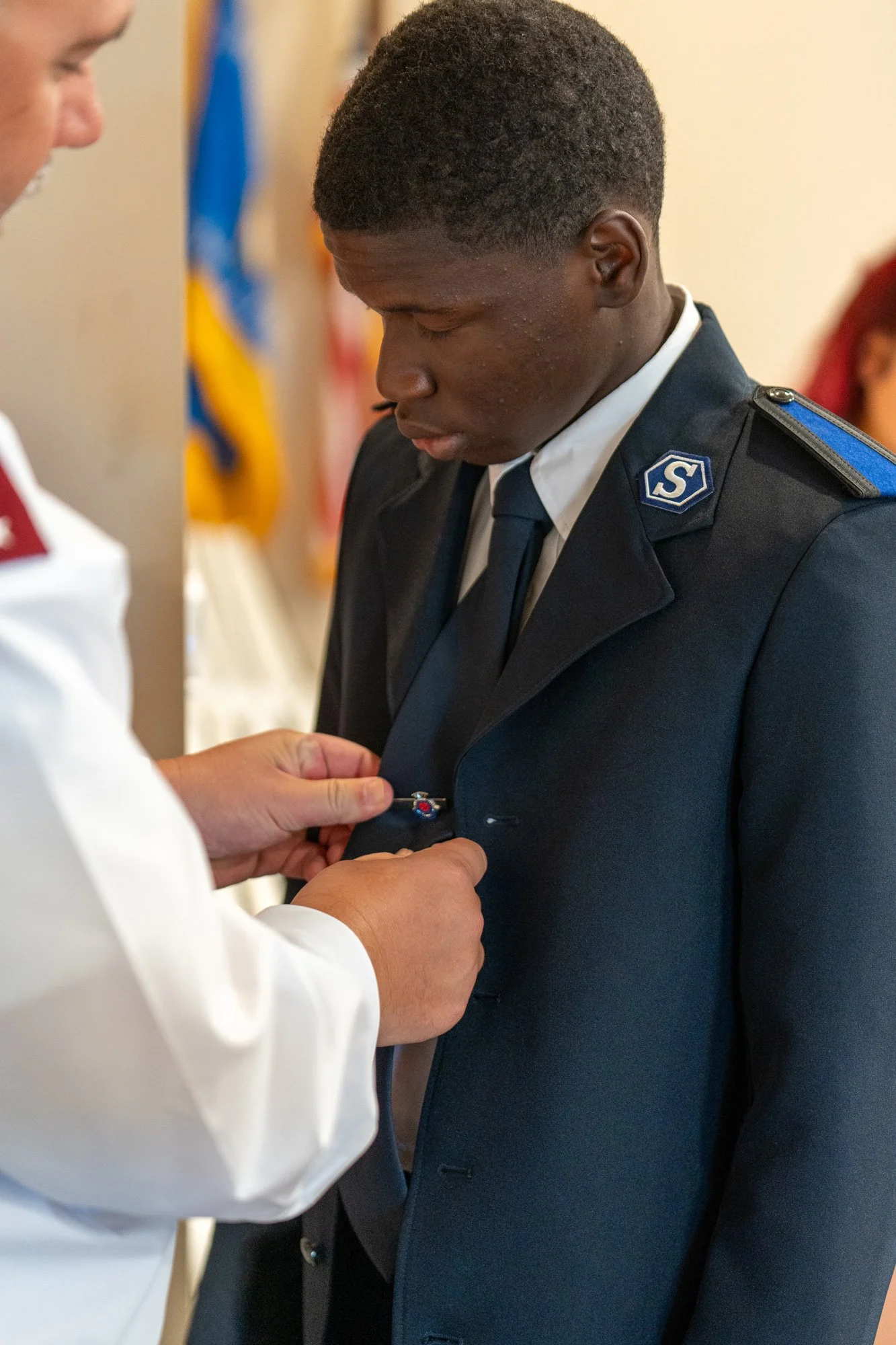
Today, Salvation Army officers train at Evangeline Booth College and serve as ordained ministers who fulfill every biblical function of a pastor: preaching, teaching, counseling, and shepherding. But they do it through a unique structure that emphasizes urgency, discipline, and the ability to go wherever the mission requires.
Is This For You?
The Bible is clear: not everyone is called to full-time ministry. But some are. And if you've felt a persistent stirring that won't go away, a holy discontent with your current path, it might be worth paying attention.
A true calling doesn't fade in two weeks. It survives scrutiny. When you learn about the sacrifices and hardships, the desire intensifies rather than disappears. And there's a strange peace amidst the challenge.
But the fundamental question isn't "Would I be good at this?" or "Would I enjoy this?"
The only question that matters is: Is God calling me to this?
If He is, He will equip you, and you'll find deep joy even in the hardest parts. The call is the foundation. What will God build upon that foundation?
Exploring whether God might be calling you to full-time ministry? Visit usscandidates.org to take the "Am I a Candidate?" quiz and learn about the path to becoming a Salvation Army officer.