
From the Empty Tomb to Everyday Obedience: A Call to Full-Time Ministry
The Ham, the Hymns, and the Hollow Monday

It's Sunday morning. Early spring. The ground is thawing, there's still a bite of chill in the air, and inside your house, it's absolute, beautiful chaos. The hallway smells like hairspray and lilies while someone wrestles a toddler into a clip-on tie and someone else irons a dress that hasn't seen the light of day since Christmas. Because it's Easter Sunday, and Easter Sunday has its own gravity.
You pile into the car. The church parking lot is full, so you park on the grass three blocks away. You squeeze into a pew shoulder-to-shoulder with people you haven't seen in months. You sing until your lungs burn. Maybe you were one of the brave ones who went to the sunrise service, standing in the dark, shivering, feeling particularly holy.
Then the service ends. The obligatory family photo happens in front of the azalea bush. And then: the main event. The spiral-cut, honey-glazed ham. The scalloped potatoes. The deviled eggs, which, ironically, always show up on the holiest day of the year.
You eat until you're nearly comatose. The afternoon winds down slowly, pastel clothes get hung back up in the closet, plastic eggs get boxed away, and the house settles into that familiar post-holiday quiet.
And then Monday comes.
The alarm goes off, and just like that, you go back to work. You go back to school. You go back to the same commute, the same inbox, the same tension you left behind on Friday.
And here's the question that quietly haunts millions of people every spring: Once the ham is eaten and the lilies wilt, what's actually left?
The Post-Easter Silence
There's a name for it, though most people never say it out loud. It's the post-Easter low, that strange emotional dip that settles in after weeks of Lenten reflection, Holy Week intensity, and the soaring high of Resurrection Sunday. The buildup is enormous, and the letdown is just as real.
You spent forty days fasting, praying, leaning in. Then came the triumph of Easter morning. And now? The season is over, the calendar moves on, and you're left standing in the quiet, wondering why the most important event in human history doesn't seem to change your Tuesday afternoon.
If you've felt that hollow, you're not imagining things. And you're not doing faith wrong. You might just be standing at the edge of a question that God has been waiting for you to ask.
The Tomb Was Empty, So You Could Be Sent
The resurrection wasn't a finale. It was a beginning.
Think about what actually happened that first Easter morning. Mary Magdalene goes to the tomb while it's still dark. She's weeping, there to anoint a body and honor the dead.
And then Jesus says her name. "Mary."
Everything shifts. She stops mourning a martyr and recognizes a living Lord. And what's the very first thing He does? He doesn't just comfort her. He commissions her: "Go to my brothers and tell them." (John 20:17)
Mary Magdalene became the first person sent after the resurrection. Not a theologian with years of training. A woman who had been weeping moments earlier. Her grief became a mandate. Her encounter became a mission.
Then the disciples. They're hiding in a locked room, paralyzed by fear, convinced they're next. Jesus walks through the wall, breathes on them, and says: "As the Father has sent me, I am sending you." (John 20:21)
Not might send you. Not will send you someday, once you've completed a certification. I am sending you. Present tense. Already in motion.
The resurrection didn't give the first followers permission to go. It gave them no option but to go. It was, and still is, a means of sending.
Why the Post-Easter Low Exists (And What It's Trying to Tell You)
Here's the connection most people miss: that hollow feeling after Easter? It might not be spiritual failure. It might be the gap between knowing the resurrection happened and letting it actually run your life.
There's a difference between treating Easter like a yearly anniversary for a historical event and treating it like a power source for the way you live on an ordinary Wednesday.
If it's just a commemoration, a nice tradition with hymns and ham, then of course Monday feels flat. You've attended a memorial service. And memorial services, by definition, are about looking backward.
But the resurrection was never meant to be managed as a memory. It was meant to be lived as a reality. The cross handled the problem: it dealt with sin and death and cleared the slate. But the resurrection started life. The cross was God's no to death. The resurrection was God's yes to everything that comes after.
And that "everything after" includes you. Your restlessness. Your 2 a.m. questions. The pull you feel toward something you can't quite name.
What If That Pull Is the Same Thing Mary Felt?
Maybe you've been sensing something for a while now. A stirring that won't quiet down. A question about whether your life is supposed to look different, not in a vague, inspirational-poster way, but in a concrete, what-am-I-actually-doing-with-my-days way.
Maybe you've even thought about full-time ministry. And then immediately talked yourself out of it because you don't feel qualified, or ready, or sure enough.
But consider who Jesus sent first. A woman mid-grief. Disciples mid-panic. Not one of them had a five-year plan. What they had was an encounter with the risen Christ, and the willingness to let that encounter move them somewhere.
Calling rarely arrives as a blueprint. It usually starts as a pull. And the clarity comes not before the first step, but during it.
What Full-Time Ministry Actually Looks Like
When people hear "ministry jobs," they picture one thing: a pastor behind a pulpit. But the reality, especially within The Salvation Army, is far more expansive.
A Salvation Army officer is an ordained minister, yes. But they're also a nonprofit administrator, a community leader, a counselor, a crisis responder, and sometimes the only stable presence in a neighborhood that's been overlooked. Officers are called to do many different things, from preaching sermons to overseeing social service programs to managing budgets to mentoring youth. It's a dual role: spiritual shepherd and organizational architect, often in the same afternoon.
This isn't a minister job that fits neatly in a box. It's a vocation that stretches across every dimension of human need. And honestly? If you go into it running on your own willpower alone, you'll burn out. Human fuel is limited. But the life that the resurrection makes available, that's inexhaustible. That's the difference between performing a role and participating in something that's already alive.
From performance to participation. That's the shift.
A Place That Prepares You for All of It
This is where Evangeline Booth College enters the story.
Located in the heart of South Atlanta, EBC has been training officers since 1927. The campus sits in the middle of the historic Pittsburgh community, surrounded by seven Atlanta-area corps and steps from the South Atlanta Kroc Center. The mission isn't something you study in a textbook. It's right outside the window.
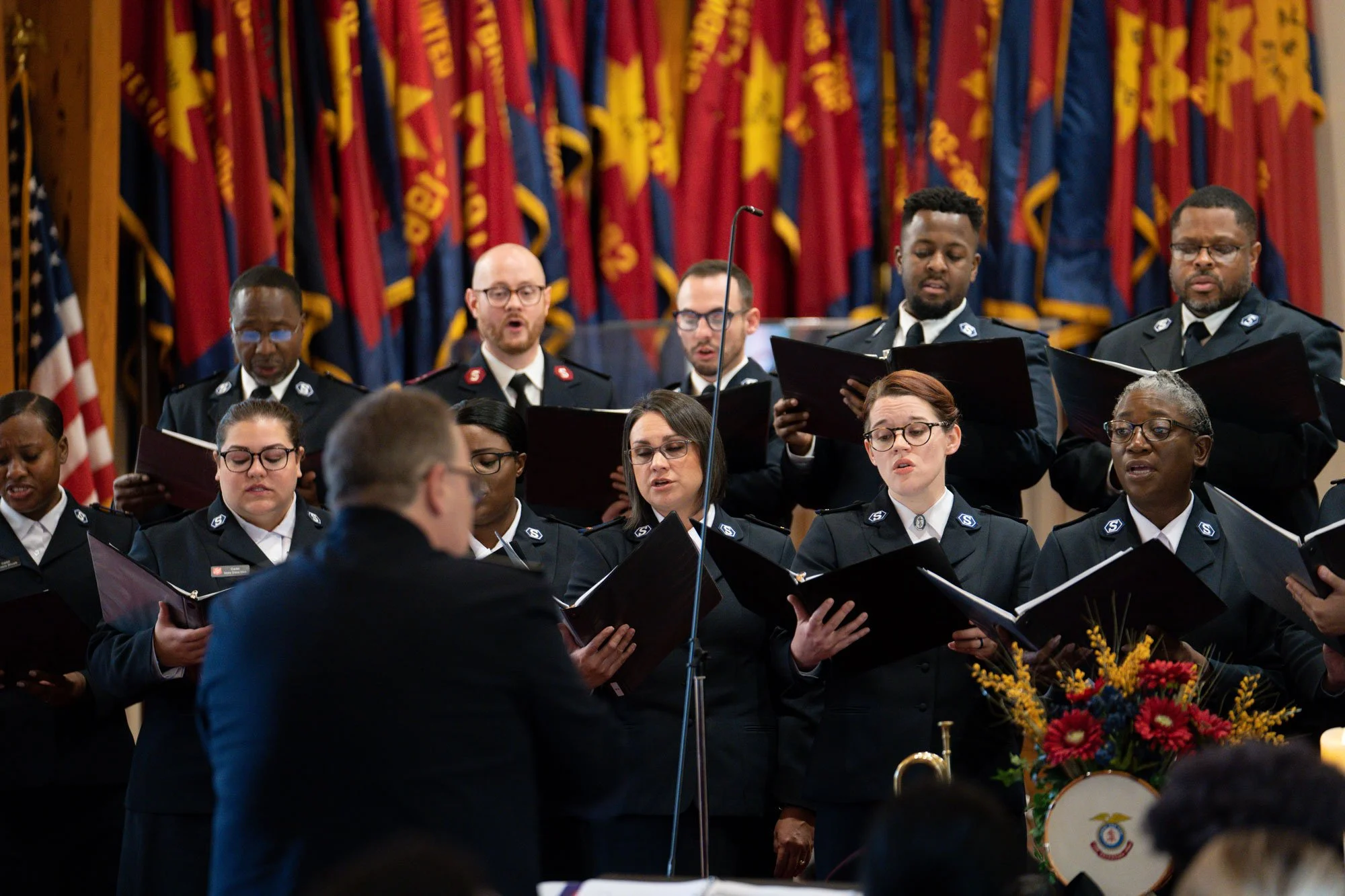
The two-year officer training program at Evangeline Booth College is built on a holistic philosophy: engage, equip, and enrich. Cadets practice ministry weekly, serving in canteen outreach alongside people experiencing homelessness, partnering with local organizations, developing skills in theology, nonprofit leadership, cross-cultural ministry, and pastoral care.
All of it filtered through one central lens: understanding God's love for every person. It's christian ministry at its most tangible.
And the preparation doesn't stop at commissioning. Through the Officer's Foundations program, new officers continue receiving mentorship and training for five years after graduation. The calling may begin with a single prompting, but the equipping is a sustained, intentional journey.
The Tomb Is Empty So That You Can Be Full
Here is what connects Mary's garden to your living room, your commute, your restless Tuesday:
The resurrection created a pattern. Encounter the risen Christ. Be changed by that encounter. And then go, not because you have all the answers, but because you've been met by someone whose life and love make staying still impossible.
You weren't meant to just commemorate Easter once a year and then go back to normal. You weren't meant to carry this stirring alone, wondering if it's real.

The 730 Weekend is an immersive experience at Evangeline Booth College in Atlanta, designed for people who are sensing something but aren't sure what it means. It's not about pressuring you toward a decision. It's about giving you space to explore, ask honest questions, and meet people who once stood exactly where you are now.
Two days. One question: What is God calling you to? A ministry calling rarely announces itself with certainty. It usually begins as a whisper.
You don't have to have the answer yet. You just have to be willing to ask.